
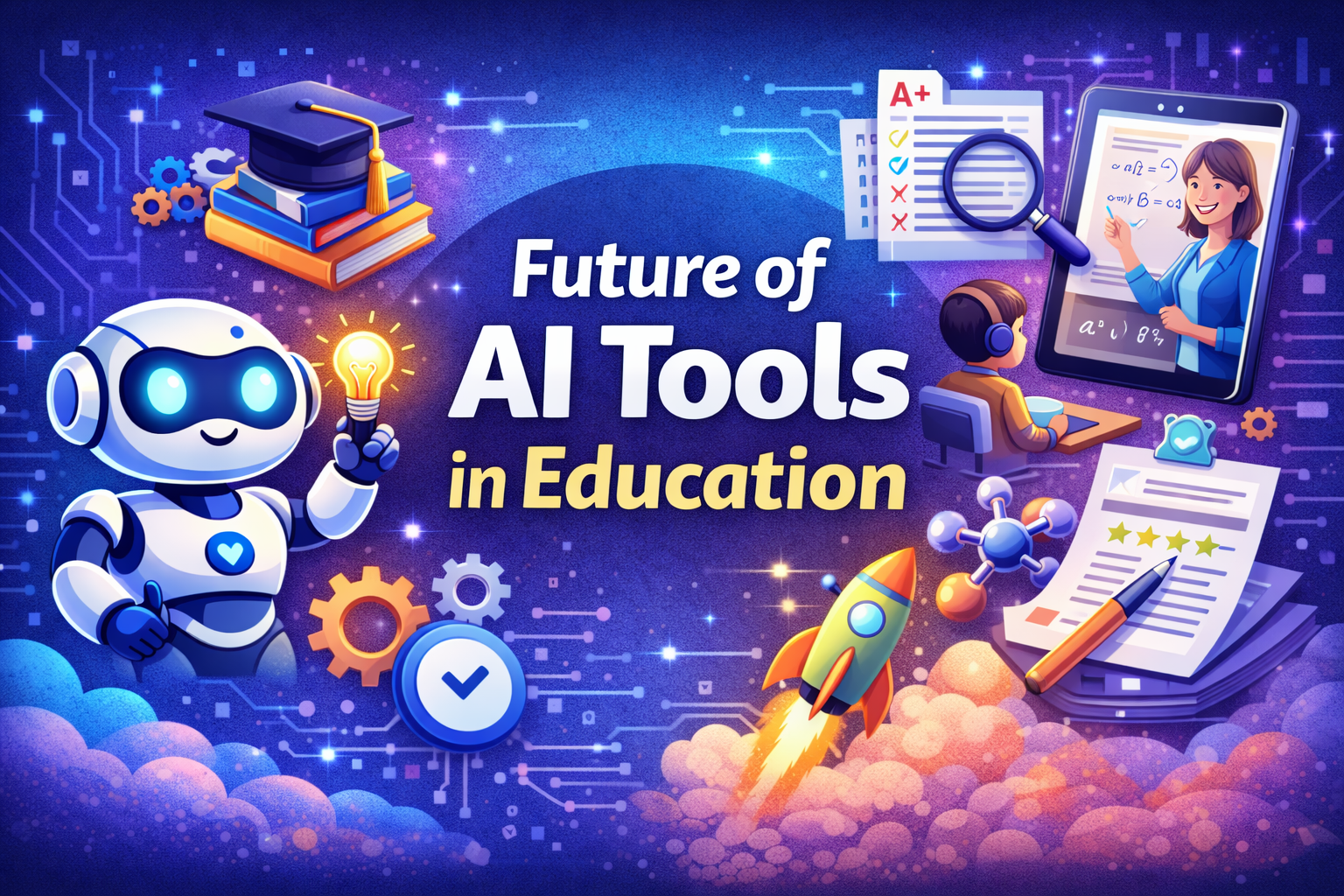
Future of AI Tools in Education
Artificial Intelligence (AI) is rapidly changing the way education works around the world. From smart classrooms to personalized learning platforms, AI tools are making education more efficient, interactive, and accessible. Students can now learn faster, teachers can manage classrooms better, and educational institutions can provide high-quality learning experiences using AI technology.Future of AI Tools in Education
In the past, education relied heavily on traditional teaching methods such as textbooks, lectures, and manual assessments. Today, AI tools are helping automate tasks, analyze student performance, and provide personalized learning support. These advancements are shaping the future of education and preparing students for the digital world. Future of AI Tools in Education
In this blog post, you will learn about the future of AI tools in education, their benefits, applications, challenges, and how they will transform learning in the coming years. Future of AI Tools in Education
What Are AI Tools in Education?
AI tools in education are software applications that use artificial intelligence to support teaching and learning. These tools help students understand concepts, assist teachers in managing classrooms, and improve educational outcomes. Future of AI Tools in Education
Simple Definition
AI tools in education are digital systems that use artificial intelligence to make learning smarter, faster, and more personalized.
Examples of AI Tools in Education
- Virtual learning assistants
- Online learning platforms
- AI-powered tutoring systems
- Automated grading systems
- Language translation tools
- Educational chatbots
- Future of AI Tools in Education
These tools are becoming increasingly popular in schools, colleges, and online learning environments.
Why AI Tools Are Important in Education
Education is evolving quickly, and technology plays a major role in this transformation. AI tools help improve learning quality, reduce workload, and provide better educational experiences.
Importance of AI in Education
- Improves learning efficiency
- Provides personalized education
- Saves time for teachers
- Enhances student engagement
- Supports remote learning
- Reduces administrative work
- Improves academic performance
- Prepares students for future careers
- Future of AI Tools in Education
AI tools make education more flexible and accessible for students worldwide.
How AI Tools Are Transforming Education
AI technology is changing education in many ways. It is improving teaching methods, learning experiences, and school management.
1. Personalized Learning
Personalized learning is one of the biggest advantages of AI in education. AI systems analyze student performance and provide customized learning content based on individual needs.
Example
If a student struggles with mathematics, AI can:
- Provide extra practice questions
- Offer step-by-step explanations
- Suggest learning resources
- Track progress
- Future of AI Tools in Education
Benefits
- Faster learning
- Better understanding
- Improved academic performance
- Future of AI Tools in Education
2. Smart Tutoring Systems
AI-powered tutoring systems act like virtual teachers. They provide instant feedback and help students solve problems.
Features
- 24/7 availability
- Instant answers
- Step-by-step guidance
- Interactive learning
Benefits
- Continuous learning support
- Improved problem-solving skills
- Increased confidence
3. Automated Grading and Assessment
Grading assignments and exams can be time-consuming for teachers. AI tools automate this process and provide accurate results.
Examples
- Multiple-choice grading
- Essay evaluation
- Performance analysis
- Progress tracking
Benefits
- Saves time
- Reduces workload
- Improves accuracy
4. Virtual Classrooms and Online Learning
AI tools support virtual classrooms and remote learning. Students can attend classes from anywhere using digital platforms.
Features
- Live video lessons
- Interactive discussions
- Digital assignments
- Attendance tracking
Benefits
- Flexible learning
- Global access to education
- Improved collaboration
5. Intelligent Content Creation
AI tools help teachers create educational materials quickly. They can generate lesson plans, quizzes, and study notes.
Examples
- Lesson planning
- Question generation
- Study material creation
- Presentation design
Benefits
- Saves time
- Improves teaching quality
- Enhances classroom efficiency
6. Language Translation and Accessibility
AI tools make education accessible to students who speak different languages or have disabilities.
Features
- Real-time translation
- Speech-to-text conversion
- Text-to-speech technology
- Accessibility support
Benefits
- Inclusive education
- Better communication
- Equal learning opportunities
Popular AI Tools Used in Education
Many AI tools are already being used in schools, colleges, and universities.
1. ChatGPT
ChatGPT helps students and teachers generate content, answer questions, and explain complex topics.
Uses
- Homework assistance
- Study support
- Content creation
- Research help
2. Google Classroom
Google Classroom is a learning management system that helps teachers manage classes and assignments.
Uses
- Assignment submission
- Student communication
- Classroom management
- Online learning
3. Duolingo
Duolingo uses AI to help students learn languages through interactive lessons.
Uses
- Language learning
- Vocabulary practice
- Pronunciation training
- Progress tracking
4. Khan Academy
Khan Academy provides free educational content and personalized learning experiences.
Uses
- Video lessons
- Practice exercises
- Skill development
- Exam preparation
5. Grammarly
Grammarly helps students improve writing skills by correcting grammar and spelling errors.
Uses
- Essay writing
- Grammar correction
- Writing improvement
- Academic communication
Benefits of AI Tools in Education
AI tools provide many advantages for students, teachers, and educational institutions.
Benefits
- Faster learning
- Improved teaching quality
- Reduced workload
- Better student engagement
- Enhanced productivity
- Personalized education
- Increased accessibility
- Improved academic performance
These benefits make AI an essential part of modern education.
Challenges of Using AI in Education
Despite its advantages, AI in education also has some challenges.
Challenges
- High implementation cost
- Data privacy concerns
- Dependence on technology
- Limited digital skills
- Internet connectivity issues
Educational institutions must address these challenges to use AI effectively.
Future Trends of AI in Education
AI technology is evolving rapidly and will continue to transform education in the future.
Future Trends
- AI-powered smart classrooms
- Virtual reality learning environments
- Advanced personalized learning systems
- Automated administrative processes
- Intelligent career guidance systems
- AI-based student performance prediction
- Voice-based learning assistants
- Global online education platforms
These trends will make education more interactive, efficient, and accessible.
Real-Life Examples of AI in Education
AI is already being used in many educational settings.
Schools
Schools use AI tools to:
- Monitor student performance
- Manage attendance
- Provide personalized learning
- Improve classroom management
Result
Better student outcomes and efficient school operations.
Colleges and Universities
Higher education institutions use AI tools to:
- Conduct research
- Analyze student data
- Automate administrative tasks
- Provide online courses
Result
Improved academic performance and efficient management.
Online Learning Platforms
Online learning platforms use AI tools to:
- Recommend courses
- Track progress
- Provide personalized learning
- Offer interactive lessons
Result
Flexible and convenient learning experiences.
Role of Teachers in the Future of AI Education
AI will not replace teachers but will support them. Teachers will continue to play an important role in guiding students and providing human interaction.
Future Role of Teachers
- Facilitators of learning
- Mentors and advisors
- Technology users
- Creative educators
- Student motivators
AI will help teachers focus more on teaching and less on administrative tasks.
How Students Can Prepare for the Future of AI Education
Students should develop skills that help them succeed in an AI-driven world.
Important Skills
- Digital literacy
- Critical thinking
- Problem-solving
- Creativity
- Communication
- Adaptability
- Technology skills
Learning these skills will help students take advantage of AI tools in education.
Conclusion
The future of AI tools in education is bright and full of opportunities. AI is transforming the way students learn, teachers teach, and institutions operate. It provides personalized learning, improves efficiency, and makes education more accessible.
As technology continues to advance, AI tools will become an essential part of education. Students and teachers who learn to use AI effectively will be better prepared for the future.

Final Thought:
AI is not replacing education—it is enhancing it. By embracing AI tools, we can create smarter classrooms, better learning experiences, and a more innovative education system for future generations.
